
International Drama in Education Conference 2027 - ONLINE
- Theatrical Methods for Democracy and Peace Education - Focus on Elementary and Primary Education - Practical Workshops, Discussions, Presentations by Renowned Speakers - Theatre, Performing Arts, Cultural Education
- The aim is to collect, discuss and make available for practice theatrical methods of democracy and peace education for school practice and for elementary education. Best practice examples will be presented and discussed.
- The online conference is in the tradition of Drama-in-Education events and offers professional input, presentations and practical workshops.
- The course is organised by IDEA-AUSTRIA & ÖBV THEATER in cooperation with the PH NÖ (University College of Teacher Education Lower Austria).
Präsentationen und Workshops
held by
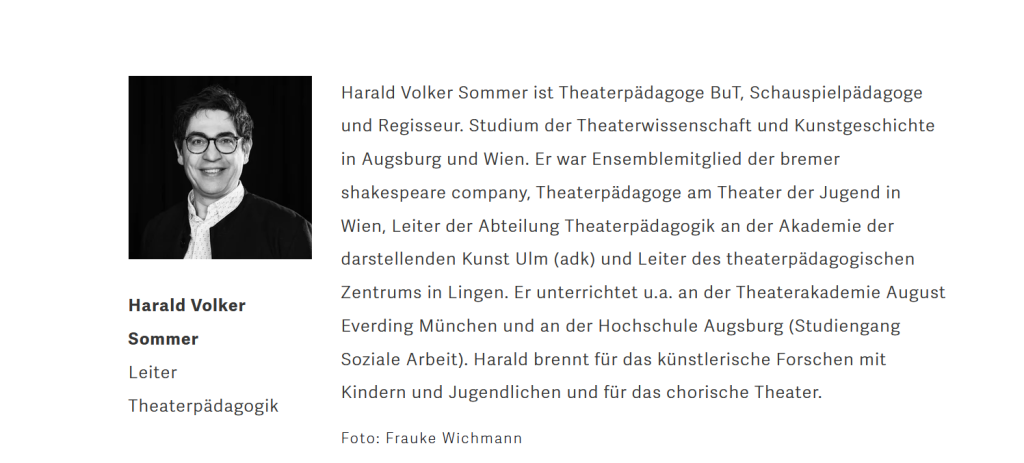
HARALD VOLKER SOMMER
TPZ Augsburg / D
KÜNSTLERISCHES FORSCHEN IM KINDERGARTEN
zum WORKSHOP - Lorem ipsum dolor sit amet, consetetur sadipscing elitr, sed diam nonumy eirmod tempor invidunt ut labore et dolore magna aliquyam erat, sed diam voluptua. At vero eos et accusam et justo duo dolores et ea rebum. Stet clita kasd gubergren, no sea takimata sanctus est Lorem ipsum dolor sit amet. Lorem ipsum dolor sit amet, consetetur sadipscing elitr, sed diam nonumy eirmod tempor invidunt ut labore et dolore magna aliquyam erat, sed diam voluptua. At vero eos et accusam et justo duo dolores et ea rebum. Stet clita kasd gubergren, no sea takimata sanctus est Lorem ipsum dolor sit amet.
EVA GÖKSEL
University of Uppsala / S
Keynote - WAS KANN DRAMA- / THEATERPÄDAGOGIK?

Lorem ipsum dolor sit amet, consetetur sadipscing elitr, sed diam nonumy eirmod tempor invidunt ut labore et dolore magna aliquyam erat, sed diam voluptua. At vero eos et accusam et justo duo dolores et ea rebum. Stet clita kasd gubergren, no sea takimata sanctus est Lorem ipsum dolor sit amet. Lorem ipsum dolor sit amet, consetetur sadipscing elitr, sed diam nonumy eirmod tempor invidunt ut labore et dolore magna aliquyam erat, sed diam voluptua. At vero eos et accusam et justo duo dolores et ea rebum. Stet clita kasd gubergren, no sea takimata sanctus est Lorem ipsum dolor sit amet.
zur KEYNOTE - Lorem ipsum dolor sit amet, consetetur sadipscing elitr, sed diam nonumy eirmod tempor invidunt ut labore et dolore magna aliquyam erat, sed diam voluptua. At vero eos et accusam et justo duo dolores et ea rebum. Stet clita kasd gubergren, no sea takimata sanctus est Lorem ipsum dolor sit amet. Lorem ipsum dolor sit amet, consetetur sadipscing elitr, sed diam nonumy eirmod tempor invidunt ut labore et dolore magna aliquyam erat, sed diam voluptua. At vero eos et accusam et justo duo dolores et ea rebum. Stet clita kasd gubergren, no sea takimata sanctus est Lorem ipsum dolor sit amet.
KARINA SPRINGER-KRAEFT
HANNOVER / D
ICH SEHE DICH - BETEILIGUNG UND DEMOKRATIEBILDUNG IM THEATERSPIEL MIT KITA-KINDERN

Karina Springer-Kraeft ist Theaterpädagogin, staatlich anerkannte Erzieherin und Clinic-Clownin. Seit vielen Jahren bringt sie Theater in Kitas, mit Kindern ab dem Krippenalter. Sie leitet geförderte Kita-Theaterprojekte in Niedersachsen und gibt Fortbildungen für pädagogische Fachkräfte, unter anderem am TuT - Schule für Tanz, Clown & Theater in Hannover.
zum WORKSHOP - Was würdest du machen? Mit dieser Frage beginnt Demokratie schon in der Kita: Kinder bringen sich mit allem ein, was sie sind. Sie werden gesehen und lernen, auch die anderen zu sehen.
Theater spielen in der Kita macht genau das möglich. Lebendig, alltagstauglich, ganz ohne Bühnenbau oder Aufführungsdruck. Im Spiel entdecken Kinder eigene Stärken und Herausforderungen UND die der anderen. Jede Idee zählt, jede Stimme wird gehört, und gemeinsam entsteht etwas Neues. So einfach kann Demokratie von Anfang an sein.
Nach einem kurzen fachlichen Impuls, auch mit Beispielen aus einem eigenen Theater-Projekt mit dem Titel "Was würdest Du machen?", wird gespielt, erprobt und erlebt.
NICOLE TITUS
xxxx
„extrem. MutIch" – PROJEKT ZUR STÄRKUNG DER DEMOKRATISCHEN (KLASSEN)-GEMEINSCHAFT

Lorem ipsum dolor sit amet, consetetur sadipscing elitr, sed diam nonumy eirmod tempor invidunt ut labore et dolore magna aliquyam erat, sed diam voluptua. At vero eos et accusam et justo duo dolores et ea rebum. Stet clita kasd gubergren, no sea takimata sanctus est Lorem ipsum dolor sit amet. Lorem ipsum dolor sit amet, consetetur sadipscing elitr, sed diam nonumy eirmod tempor invidunt ut labore et dolore magna aliquyam erat, sed diam voluptua. At vero eos et accusam et justo duo dolores et ea rebum. Stet clita kasd gubergren, no sea takimata sanctus est Lorem ipsum dolor sit amet.
ZUM WORKSHOP - Nicole Titus führt dieses theaterpädagogische Projekt seit 2022 an verschiedenen Mittel- und Realschulen in Ingolstadt durch. Gemeinsam mit den Schüler*innen werden Konfliktsituationen aus dem Alltag erforscht und Lösungsstrategien erarbeitet mit Hile des Forumtheaters nach A. Boal.
Teambuilding Übungen sowie Impro-Theaterspiele runden das Angebot ab.
Yasuko SHIOZAWA, Yuka KUSANAGI, Aiko SAITOU
THREE JAPANESE UNIVERSITIES
OMUSUBI KORORIN (THE ROLLING RICE BALL)
three researchers and presenters come from different universities in japan, dealing with English as a Foreign Language
zum WORKSHOP - Omusubi Kororin (The Rolling Rice Ball) is a traditional Japanese folktale. Using this story in the format of kamishibai (traditional Japanese paper theater), this workshop invites participants into the imaginative world of peaceful little mice.
In the story, a kind-hearted old man accidentally drops a rice ball into a hole in the woods, from which a cheerful song echoes: “Rolling, rolling, rice ball, roll.” Delighted, he drops another rice ball and eventually tumbles into the hole himself. There, he discovers a community of mice singing and dancing around his rice balls. After joining their festivities, he is rewarded with a box filled with treasure. Hearing of this, his greedy neighbor tries to imitate him, only to fail.
This folktale offers rich themes to explore through storytelling and drama, such as empathy, greed, and modesty. In this session, participants will engage in physical and vocal activities—chanting and dancing together—while reflecting on key questions from within the story: How would you feel if you found mice celebrating with your food? Would you accept their gift? Through these narrative and dramatic explorations, participants can experience how traditional stories nurture collective imagination and ethical thinking, and they’ll have a chance to apply this to early childhood education that they lead in their own educational contexts.